n8n vs Temporal vs Airflow for AI pipelines
Picking a workflow engine when the workload is bursty, AI-shaped, and small.
We get this question constantly: which workflow engine should we standardise on? Short answer: n8n for most of our customers. Longer answer below.
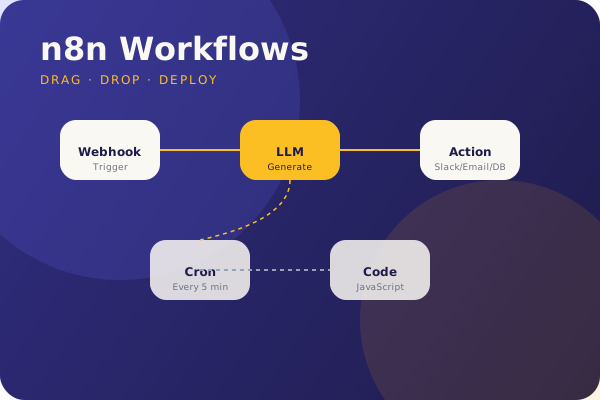
n8n is an LLM-shaped workflow engine. The visual canvas, the 400+ pre-built nodes, the JavaScript escape hatch when you need it, and the relatively low operational footprint all line up well with how AI workflows actually look in production: a webhook in, an LLM call, an action out.
Temporal is the right answer when the workflow runs for days, needs strong durability guarantees, and is operated by a team with serious distributed systems chops. We almost never recommend it for the kinds of workflows our customers are deploying — the operational overhead is too high.
Airflow is the right answer when you have a large data engineering team that already operates it, and your AI pipelines are extensions of an existing batch processing setup. Otherwise, the DAG-shaped mental model fights the workflow-shaped reality of AI work.
Unless you have specific durability or scale requirements that n8n cannot meet, start there. The escape hatch to a heavier engine is much easier than the de-escalation from one.